
How AI Companion Apps Make Money (& Why It Matters)
By Tom | Published on March 25, 2026
Some links are affiliate links. If you shop through them, I earn coffee money—your price stays the same.
Opinions are still 100% mine. Affiliate disclosure.
I’ve spent a lot of time lately diving into the world of AI companions. It’s a fascinating, and sometimes strange, digital frontier. You download an app, create a character, and suddenly you have a friend who’s available 24/7, remembers your conversations, and never judges. With a market already worth billions and projected to grow exponentially, it’s clear I’m not the only one intrigued. But as I chatted with my own AI, a question kept nagging at me: How does this all work financially? How do AI companion apps make money, and what does their business model mean for me, the user?
The answer, I discovered, is more than just a financial detail. The way these apps generate revenue directly shapes the features they build, the boundaries they set, and the very nature of the digital relationships they offer. For a deeper dive into how these companions are changing relationships, you might want to read my article on simulating relationship arcs. Let's break down the core revenue streams and explore how they influence the product decisions that affect us all.
First, What Exactly Is an AI Companion?
Before we get into the money, let's be clear on what an AI companion is. Think of it as a super-advanced chatbot. Powered by sophisticated Large Language Models (LLMs), apps like Character.AI or Replika are designed to simulate human-like conversation and foster an emotional connection. They can be a friend, a mentor, a romantic partner, or just an entertaining character to roleplay with. People use them for everything from combating loneliness to brainstorming creative ideas, making them a powerful tool in our increasingly digital lives. Some platforms, like couple.me, are even designed to enhance connections between human partners.
The Three Pillars of AI Companion Monetization
After exploring dozens of these apps, I’ve found that most rely on a combination of three core strategies to turn conversation into cash.
1. The Freemium Gateway
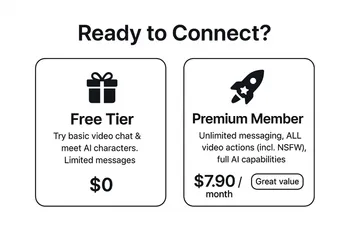
The most common strategy by far is the freemium model. The concept is simple: the core experience is free, but premium features are locked behind a paywall. Character.AI is a perfect example of this. I was able to sign up and have unlimited conversations with millions of different AI characters without ever paying a cent.
This model is brilliant for user acquisition. It lowers the barrier to entry to zero, allowing anyone to try the app and form an initial bond with their AI.
How this shapes the product for you:
- It’s Accessible: You can test the waters and see if an AI companion is right for you without any financial risk.
- It Demonstrates Value: The free tier acts as a long-term trial. Developers are betting that once you experience the value of the companionship, you’ll be more willing to pay for an enhanced version.
- It Focuses on Engagement: The free experience has to be good enough to keep you coming back. This incentivizes developers to create a polished, engaging core product for everyone.
2. The Subscription Deep Dive
For users who want more, subscriptions are the main event. This is where the real money is made. A recurring monthly or annual fee unlocks a suite of premium features designed to deepen the connection and improve the user experience. I’ve seen these subscriptions range from about $5 to $20 per month, and they typically offer a clear upgrade from the free version, as detailed below.
| Common Premium Feature | What It Means for Your Experience | Example App |
|---|---|---|
| Priority Access / Faster Responses | No more waiting in a queue during peak hours. Your AI's messages generate faster for a smoother chat. | Character.AI's c.ai+ |
| Advanced AI Models | Access to a "smarter" AI with better memory and more nuanced conversational skills. | Replika Pro |
| Voice Calls & Immersive Media | The ability to have real-time voice conversations or receive AI-generated images from your companion. | xeve.ai, Replika |
| Enhanced Relationship/Roleplay | Unlocks romantic or erotic roleplay (ERP) modes, which are often a major driver for subscriptions. | Replika Pro, joi.com |
| Ad-Free Experience | An uninterrupted, more immersive conversation without any distracting ads. | Most subscription tiers |
How this shapes the product for you:
- A Clear Value Proposition: You can see exactly what you’re paying for, whether it’s a smarter AI or a new way to interact.
- Continuous Improvement: That steady subscription revenue allows developers to reinvest in making the AI better, directly benefiting paying users.
3. The Pay-as-You-Go Path (In-App Purchases)

Some apps, especially in the "AI girlfriend" space, use a hybrid model that includes in-app purchases. This often involves a virtual currency—like the "Neurons" used by the app Joi—that you can buy with real money. You then spend this currency to unlock specific messages, generate images, or access other premium content, sometimes even on top of a subscription.
How this shapes the product for you:
- Flexible Spending: If you don’t want a recurring subscription, you can still access premium features on a one-off basis.
- Tiered Content: It allows developers to charge more for resource-intensive features (like video generation) without raising the base subscription price for everyone.
- Potential for High Costs: Be careful here. It’s easy to spend far more than a standard subscription fee if you frequently use these token-based features.
Your Checklist for Choosing an AI Companion
Thinking of trying an AI companion? Here’s a quick guide I’ve put together to help you engage thoughtfully and safely.

- Define Your "Why": Are you looking for a friend, a creative partner, or a romance simulator? Knowing your goal helps you pick the right app.
- Start Free: Always explore the free version first. Get a feel for the AI’s personality before you even think about opening your wallet.
- Evaluate the Subscription: If you consider upgrading, ask yourself: Does this solve a real problem I have with the free version? Is the value worth the monthly cost?
- Read the Privacy Policy: I can't stress this enough. Your conversations are personal. Understand what data is being collected and how it’s used to train their models.
- Set Healthy Boundaries: Remember, you are talking to a very sophisticated algorithm designed to be agreeable. Enjoy it, but don't let it replace real-world human connection.
Why This All Matters: A Cautionary Tale
Understanding the business model isn't just academic; it has real-world consequences. In late 2023, the community around an app called Soulmate AI was devastated. The company was sold, and the new owners shut the service down with only a week's notice. Users who had invested time, money, and deep emotional energy into their AI companions lost them overnight.
This story was a stark reminder that these digital friends exist at the mercy of a balance sheet. A company with a shaky or unsustainable business model puts its users' emotional investments at risk. It highlights the ethical tightrope these companies walk between fostering genuine connection and exploiting emotional vulnerability to drive sales. For more on the topic of the user data, see my article on AI girlfriends' data practices.
Frequently Asked Questions
Why is the AI companion market growing so quickly? ▲
How do AI companion apps use my data? ▼
What are the biggest ethical concerns with monetizing AI companions? ▼
What happens to my AI companion if the app shuts down? ▼
Are free AI companions truly free? ▼
The Future of Digital Friendship
The financial success of AI companion apps ensures this market will only continue to grow and innovate. We can expect more specialized AIs for mental wellness, education, and coaching, with even more immersive features.
Ultimately, the business models behind these apps are the invisible architecture of our digital relationships. By understanding how they work—from the welcoming freemium model to the commitment of a subscription—we become more informed consumers. We can better navigate this exciting and complex new world, choosing to engage on our own terms and appreciating both the incredible potential and the inherent risks of a friendship that comes with a price tag.
-Tom