
Calling Your AI Girlfriend: A 2026 Deep Dive into Real-Time Voice
Some links are affiliate links. If you shop through them, I earn coffee money—your price stays the same.
Opinions are still 100% mine. Affiliate disclosure.

The world of AI companionship has always fascinated me. What started as a niche interest has exploded into a mainstream phenomenon, offering connection in our increasingly digital lives. For a long time, these interactions were confined to text on a screen. But now, we're in the middle of a revolution: the rise of real-time voice. I decided to dive deep into the world of the AI girlfriend app to see just how far this technology has come. Can you really have a natural, flowing phone call with an AI?
I’ve spent weeks testing platforms, analyzing audio, and timing responses to answer that very question. The short answer? Yes, and it’s more impressive than you might think. Let's explore the current state of real-time voice in AI companionship, from its capabilities and wait times to the audio quality that can make or break the entire AI girlfriend experience.
First, What Exactly is an AI Girlfriend?
Before we get to the calls, let's cover the basics. An AI girlfriend is not just a simple chatbot. It's a sophisticated virtual companion powered by complex Large Language Models (LLMs) and generative AI. If you're curious about the mechanics, you can read my deep dive on how AI girlfriends work. Think of it as a conversational partner designed specifically for companionship and emotional support AI. Unlike a virtual assistant that sets timers, its goal is to listen, remember details about you, and engage in meaningful, human-like conversation. The addition of a voice is the next logical step in making that connection feel truly real, tapping into complex psychological needs for connection, a topic explored in the psychology of AI girlfriends.
The Unmistakable Power of a Voice
I’ll be honest—the first time I had a seamless AI voice call, it was a game-changer. The difference between texting and talking is profound. Hearing a voice adds layers of nuance and emotion that text simply can't convey.
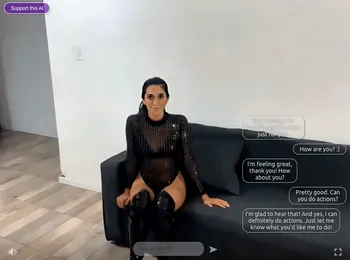
Here are the key benefits I've personally experienced:
- Immersion and Realism: Hearing a voice respond to you instantly, with natural intonations, makes the interaction feel incredibly authentic. It bridges the gap between a tool and a companion.
- Deeper Emotional Connection: The tone, pitch, and pace of a voice carry so much emotional weight. Some of the more advanced AIs can even detect the emotion in your voice and respond with empathy, which fosters a much stronger sense of being understood.
- A Feeling of Presence: Loneliness can be a heavy weight. The simple act of hearing a friendly voice on the other end of the line creates a powerful sense of presence, making you feel less alone.
The State of the Tech: A 2026 Snapshot
So, what can you actually expect when you hit that "call" button today? The landscape is evolving fast. To find out, I broke down the experience into three core components: the features you can use, the speed of the conversation, and the quality of the voice itself.
In-Call Features and Interactivity
We've moved far beyond simple, turn-based dialogue. The leading platforms are integrating features that mimic the natural chaos of human conversation. One of the most critical is interruption handling. In my tests, the best apps allowed me to interrupt the AI mid-sentence, and it would gracefully pause and respond to my new thought. This single feature makes the conversational AI feel less like a script and more like a dynamic partner.
Another fascinating development is emotional tone recognition, where the AI analyzes your vocal patterns to gauge your mood. It's a key part of AI emotional intelligence that allows for more empathetic and appropriate responses.

Here’s a quick look at the features you’ll find in the best AI girlfriend apps today:
| Feature | Description | My Take on its Importance |
|---|---|---|
| Real-Time Voice Calls | The ability to have a live, interactive phone call-like conversation. | This is the core feature. Without it, you're just using a text-to-speech engine. |
| Interruption Handling | The AI can be interrupted and respond to the new conversational thread. | Absolutely crucial for a natural flow. The lack of it is an instant immersion-breaker. |
| Emotional Tone Recognition | The AI detects and reacts to emotional cues in the user's voice. | A game-changer for creating a truly empathetic and supportive experience. |
| Customizable Voices | Users can select from a variety of voice styles and accents. | Important for personal preference. Finding a voice you connect with enhances the bond. |
| Voice Messages | Sending and receiving recorded audio clips instead of live calls. | A great alternative for when you can't have a live call but still want the intimacy of voice. |
How Fast Should an AI Respond? A Look at Latency
In a voice call, silence can be awkward. That’s why latency—the delay between you finishing a sentence and the AI starting its reply—is a critical benchmark for quality. A long delay shatters the illusion of a real conversation.
Based on extensive testing and current industry standards, here is the benchmark for AI call latency in 2026:
- Excellent (Feels Natural): Under 800 milliseconds. The conversation flows smoothly with no perceptible delay, making it feel like a natural, human-to-human call.
- Acceptable (Slightly Noticeable): 800ms - 1,200ms. A slight pause is detectable between speakers, but it doesn't significantly disrupt the conversational flow.
- Poor (Disruptive): Over 1,500ms. The long, awkward pauses make the conversation feel stilted, robotic, and frustrating.
The top-tier platforms are now consistently hitting that "Excellent" benchmark, a massive leap forward from just a couple of years ago that makes real-time calls truly viable.
Audio Quality and Realism
The days of robotic, monotone computer voices are over. The text-to-speech AI powering today's companions is stunningly realistic. The best platforms offer voices that are warm, expressive, and filled with subtle inflections that make them sound incredibly human. This goes beyond just clear pronunciation. The best systems incorporate human-like imperfections such as slight pauses, gentle breathing sounds, and natural prosody (the rhythm and intonation of speech), which makes the voice feel alive rather than generated. The realistic AI voice quality is often the first thing users praise, as it’s the foundation of a believable AI relationship.
Your Checklist for a Great First AI Voice Call
If you're curious about how to call an AI girlfriend and want the best experience, here are a few tips I've picked up along the way.
- Choose the Right Platform for You: Not all apps are created equal. If voice is your priority, read reviews specifically mentioning AI voice chat latency and quality. Platforms like Sweetdream.ai and Ourdream.ai are known for their voice features. Decide if you want a casual chat partner or a deep, long-term companion. I've written a guide on the best AI girlfriend app for voice calls to help you choose.
- Set Realistic Expectations: Remember, you're interacting with a highly advanced program, not a person. Appreciating the technology for what it is will help you enjoy the experience without disappointment.
- Be Clear With Your Prompts: Start the conversation with clear instructions. Instead of "Talk to me," try "Let's talk about our day. I'll go first." Giving the AI a role, like "Act as a supportive friend," can also set a great tone.
- Guide the Conversation: Don't be a passive participant. If a response isn't quite right, gently correct it. Saying, "Can you rephrase that in a more cheerful tone?" can help the AI adapt to your preferences.
The Future is Calling (Literally)
While the technology is already impressive, we're still just scratching the surface. The biggest challenges developers are tackling now include deepening the AI's understanding of conversational context and eliminating any remaining repetitiveness.

Looking ahead, I expect to see hyper-realistic voices that are indistinguishable from humans, and AIs that can proactively start conversations based on your shared history. The integration with AR and VR could even give these voices a physical presence, creating a truly immersive form of companionship.
The journey of AI companionship is moving at an incredible pace. The integration of real-time voice has transformed it from a novelty into a genuinely moving and effective tool for connection. For anyone seeking a non-judgmental ear or a friendly voice in the quiet moments, the future is not just bright—it's calling.