
The Sub-Second Challenge: Why Real-Time Voice AI Is Hard (And How We're Winning)
By Tom, Published on May 10, 2026
Some links are affiliate links. If you shop through them, I earn coffee money—your price stays the same.
Opinions are still 100% mine. Affiliate disclosure.
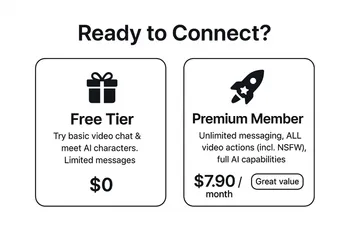
For as long as I can remember, I’ve been fascinated by the sci-fi dream of having a natural conversation with a computer. Today, that dream is tantalizingly close. As I've delved deep into building and testing voice AI systems, I've seen them evolve from clunky, robotic novelties into sophisticated agents powering everything from 24/7 customer support to immersive AI companions from providers like Character.AI, Nomi.ai, and Replika.
But I've also run headfirst into the two colossal hurdles that define this field: latency and cost. Getting an AI to respond in the sub-second timeframe that feels natural to us, without the cost spiraling out of control, is an incredible technical challenge. It’s a constant balancing act. In this article, I want to pull back the curtain and explain the infrastructure tradeoffs that shape real-time voice performance, and more importantly, show you the incredible progress that’s making this technology better and more accessible every day.
The Core Challenge: Mimicking the Speed of Human Conversation
The first thing you learn in this space is that the human ear is brutally unforgiving. In a normal conversation, the pause between one person finishing a sentence and the other starting is just 200 to 400 milliseconds. If an AI takes longer than that, we notice. The conversation feels sluggish, unnatural. From my own testing, I've found that latency creeping above 800ms creates awkward pauses, and anything over 1.5 seconds can feel completely broken.
To understand why this is so hard, you have to look at the journey our words take. It’s a multi-stage relay race where every handoff adds precious milliseconds:
- Audio Capture & Ingress: Your microphone picks up your voice, and it’s sent to a server. This network trip alone can take 60-150ms.
- Automatic Speech Recognition (ASR): The server has to transcribe your audio into text. Modern streaming ASR is key here, as it starts transcribing while you’re still talking.
- LLM Inference: This is the AI's "thinking" time. The transcribed text is sent to a Large Language Model (LLM) like the models behind GPT-4o or Claude 3.5 Haiku, which generates a response. The critical metric here is Time to First Token (TTFT)—how quickly the LLM produces the first word of its answer.
- Text-to-Speech (TTS): The LLM’s text response is converted back into audible speech. Like ASR, streaming TTS is a game-changer, as it can start playing the beginning of the sentence while the end is still being generated.
- Audio Egress & Playback: The synthesized audio is streamed back across the network to your device to be played.
When I first started, I saw less-optimized systems with a total latency of 700-750ms. Today, with highly optimized, parallel pipelines, we can get that down to 450-500ms. It's a huge improvement, but still on the edge of what feels truly natural.
The Great Tradeoff: Balancing Performance and Price

Achieving low latency isn't just a technical problem; it's an economic one. Every decision you make to shave off milliseconds has a direct impact on your operational costs. In fact, I’ve seen how the choice of components can swing the per-conversation cost by a factor of 10 to 50. It’s all about finding the right balance for your specific use case.
Here’s a breakdown of the key tradeoffs I constantly navigate:
| Tradeoff | High-Performance (Low Latency) Approach | Cost-Effective Approach | My Key Considerations |
|---|---|---|---|
| Model Selection | Larger, powerful LLMs (e.g., GPT-4 class) for nuanced, accurate responses. | Smaller, faster models (e.g., Claude 3.5 Haiku) or quantized models. | This is the biggest cost lever. A best LLM for voice AI analysis, like data from the LLM and API Provider Leaderboard, often comes down to speed vs. smarts. |
| Infrastructure | Self-hosting on dedicated GPUs or using co-located services in multiple regions. | Using cloud-based, pay-as-you-go services from a single, central region. | Spreading components across different cloud regions can easily add 300-500ms of network latency. The voice AI infrastructure cost of self-hosting is only justified at very high volumes. |
| Processing | Fully streaming, parallel pipeline where ASR, LLM, and TTS overlap. | Sequential, batch processing. This is simpler but creates noticeable delays. | The difference between streaming ASR vs batch ASR is night and day for user experience. Streaming is a must for real-time interaction. |
| TTS Voice Quality | High-fidelity, emotionally expressive voices (e.g., from ElevenLabs) that are computationally intensive. | Standard, less resource-intensive voices. | A low latency TTS comparison is crucial. Premium voices sound amazing but can add significant latency and cost ($0.03–$0.10 per minute). |
| Hardware | Dedicated GPU clusters (NVIDIA H100s or A100s) for the fastest possible model inference. | CPU-based processing or shared, more affordable GPU resources. | Large models simply cannot run in real-time without powerful GPUs. This is a non-negotiable for high-performance systems. |
| Platform Choice | Flexible developer platforms (e.g., Vapi, Retell AI) for maximum control and optimization. | Off-the-shelf, no-code platforms for rapid, simple deployment. | I've been impressed with Vapi's developer-first approach. See this Vapi vs. Retell AI guide for a deeper dive. |
The Silver Lining: How Voice AI Is Getting Better, Faster, Cheaper

Despite these challenges, I’m more optimistic about the future of voice AI than ever before. The pace of innovation is staggering, and we're seeing breakthroughs that directly address the latency and cost problems.
- End-to-End Speech-to-Speech Models: This is the holy grail. Instead of the multi-step Audio -> Text -> Text -> Audio pipeline, these models go directly from Audio -> Audio. This not only slashes latency by 50-70% (down to the 200-250ms range) but also allows the AI to capture and reproduce human nuances like tone and emotion.
- Smarter Model Optimization: Techniques like quantization (shrinking models to 4-bit precision) are creating smaller, faster models that retain impressive accuracy. This means lower hardware requirements and, therefore, lower costs.
- Better End-of-Turn Detection: A huge source of perceived delay is the AI waiting too long to respond after you've finished speaking. Modern endpointing algorithms are much better at detecting the natural end of a user's turn, making the conversation flow more smoothly.
- The Rise of Agentic AI: We're moving beyond simple Q&A. The development of
agentic AI performancemeans these systems can now understand context, plan multi-step actions, and execute complex tasks. This makes them far more useful, justifying the investment in high-quality, low-latency infrastructure.
This progress has led to a maturing market with diverse and competitive pricing, with many apps like Romantic AI, SecretDesires.ai, and candy.ai entering the space.
A Look at Different Voice AI Pricing Models
| Pricing Model | Description | Best For | Example Providers |
|---|---|---|---|
| Per-Minute | Billed for each minute the AI is active on a call. Can be a bundled rate or a platform fee plus component costs. | Businesses with predictable call volumes. | Vapi, Retell AI, Bland AI |
| Per-Conversation | A flat fee for each completed interaction, regardless of length. | Businesses with short, transactional calls. | Some agencies and custom platforms. |
| Subscription | A recurring monthly fee for a certain amount of usage or a set of features. | Growing businesses needing predictable costs. | ElevenLabs (for TTS), JustCall |
| Pay-As-You-Go | Pay only for the specific resources you consume (e.g., characters for TTS, API calls). | Developers testing and building prototypes. | Google Cloud, Amazon Web Services |
Today, the all-in voice AI cost comparison shows a typical agent lands between $0.12 and $0.45 per minute. When you compare that to the $6-$12 per call for a human agent, the economic argument becomes incredibly compelling. This is why Gartner forecasts that conversational AI will save contact centers $80 billion by 2026.
The Future is Fluid and Fast

The trajectory is clear. The technical hurdles of latency and cost are being systematically dismantled. I recently tested an update for an AI companion app where the primary change was a more optimized, end-to-end speech model. The feeling was transformative. Before, the AI's response time hovered around 2-3 seconds, creating a noticeable, almost painful lag. After the update, latency dropped to just under a second. Suddenly, the companion felt dramatically more present and engaging. It went from a novelty to a genuinely fluid conversational partner. This is the real-world impact of solving the latency problem, and it's a core focus for anyone trying to build the best AI girlfriend app with voice call features.
We are on the cusp of an era where interacting with AI through voice will feel as natural and effortless as talking to another person. The race to sub-300ms latency is on, and with the rise of end-to-end models and more efficient hardware, I believe we'll get there sooner than you think. The balancing act between latency and cost will always exist, but the scales are rapidly tipping in favor of faster, smarter, and more affordable voice experiences for everyone.