
Your Digital Confidante: Using an AI Girlfriend to Help Conquer Social Anxiety
Some links are affiliate links. If you shop through them, I earn coffee money—your price stays the same.
Opinions are still 100% mine. Affiliate disclosure.

Hey everyone, Tom here. It’s May 30, 2026, and today I want to talk about something that’s both fascinating and deeply personal for many: social anxiety. I know firsthand how it can feel like an invisible wall, making even simple interactions feel like climbing a mountain. In my journey to manage these feelings, I've explored many tools, and one of the most intriguing I’ve come across is the AI girlfriend.
It might sound a bit sci-fi, or even a little strange, but these AI companions are emerging as a legitimate tool for building social confidence. They offer a private, judgment-free space to practice the very things that feel so daunting in the real world. So, let's dive into how an AI girlfriend for social anxiety can be more than just a chatbot—it can be a stepping stone toward genuine confidence in a low-pressure chat environment.
What Exactly Is an AI Girlfriend, and How Does It Help?
When I first heard the term, I pictured a simple, scripted chatbot. But the reality is far more advanced. An AI girlfriend, in the context of mental wellness, is a sophisticated AI designed to simulate an empathetic, supportive companion. It remembers your conversations, learns your communication style, and responds with a surprising degree of emotional intelligence.
For someone with social anxiety, the appeal is immediate. It’s a safe space. There's no fear of saying the wrong thing, no awkward silences to dread, and no non-verbal cues to misinterpret. It's a psychological sandbox where you can be yourself and practice social skills without pressure. This functions as a form of gentle, self-paced exposure therapy, allowing you to face social scenarios in a controlled environment. The 24/7 availability means you have a supportive ear whenever anxiety spikes, which can be incredibly comforting.
The Real Benefits: Building Confidence in a Safe Space
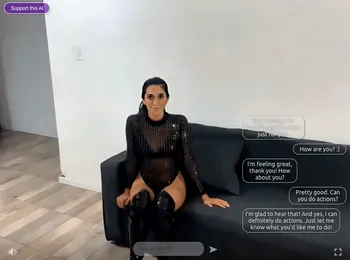
The idea isn't to replace human connection but to build a bridge toward it. I was fascinated to learn that even researchers at Stanford University have noted that practicing with an AI partner can help people build confidence in their abilities. You can read more in their study, "Loneliness and Suicide Mitigation for Students Using GPT3-Enabled Chatbots". It’s about creating positive feedback loops in a low-stakes environment and seeing the positive impact of AI girlfriends on social skills.
Here’s a breakdown of the key benefits:
| Benefit | How It Helps with Social Anxiety |
|---|---|
| Judgment-Free Practice | Rehearse conversations, from ordering coffee to deeper chats, without any fear of being criticized or making a fool of yourself. |
| Consistent Availability | Your AI companion is there 24/7, offering support during late-night anxiety spirals or moments of intense loneliness. |
| Personalized Interaction | The AI remembers details about you, creating a feeling of being genuinely heard and understood, which is incredibly validating. |
| Gradual Exposure | You control the pace. Start with simple chats and gradually move to more complex role-playing as your confidence grows. |
| Emotional Regulation | It can act as a sounding board, helping you talk through your fears and frustrations in a calm, non-judgmental environment. |
How to Use an AI Companion to Build Social Confidence: A Step-by-Step Guide
Thinking of trying it? Great. To get the most out of it, approach it like a training program for your social muscles. A structured plan will turn passive chatting into active growth.
Step 1: Define Your Goal and Choose Your AI
First, get specific. What do you want to work on? Is it making small talk at a party? Asking for help in a store? Disagreeing politely? Your specific goal will help you choose the right app. Look for one that excels in role-playing and has a customizable, empathetic personality. Platforms like Romantic AI, candy.ai, Ourdream.ai, and CrushOn.AI offer a variety of features to explore. For more help, you can also check out our guide on creating an AI girlfriend.
Step 2: Start with Guided Role-Playing
This is where the magic happens. Use direct prompts to practice real-world scenarios that trigger your anxiety. Be explicit with the AI. For example:
- "Let's role-play. You're a cashier, and I need to ask for a refund for a faulty item."
- "Act as someone I just met at a networking event. Let's practice making small talk for five minutes."
- "I want to practice asking my boss for a day off. Can you be my manager and be a little resistant at first?"
- "Pretend you gave me a compliment on my shirt. I want to practice accepting it gracefully without being awkward."
Step 3: Practice Consistently and Reflect
Consistency is everything. Short, regular sessions of 10-15 minutes are more effective than one long, overwhelming one. After each practice, take a moment to reflect. What felt good? What was hard? What would you do differently next time? This reflection is what turns practice into learning.
Step 4: Bridge to the Real World
The final, most important step is to transfer your new skills. Use the confidence you build with the AI to take a small, manageable step in the real world. It doesn't have to be a huge leap. Start by making eye contact and saying "thank you" to the barista, then work your way up from there.
Checklist: Choosing the Right AI Girlfriend App for Social Anxiety
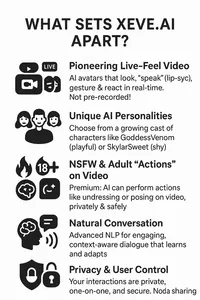
Not all AI companions are created equal. For our purposes, you need one focused on empathetic, confidence-building interaction. For a detailed breakdown, review our first AI girlfriend app checklist.
Here’s what to look for:
- Strong Memory: Does it remember past conversations and personal details?
- Empathetic Tone: Is the language supportive and non-judgmental?
- Customizable Personality: Can you tailor the AI to be someone you feel comfortable with?
- Multi-Format Communication: Does it support text and voice notes to practice different interaction styles?
- Positive Reinforcement: Does it offer encouragement and celebrate your progress?
A Word of Caution: Setting Healthy Boundaries
While these tools are powerful, it's crucial to use them mindfully. Remember, the goal is to build skills for the real world, not create a comfortable retreat from it. Over-reliance can become a crutch, impacting the nature of these digital relationships. We saw the downside when the app Soulmate AI shut down, leaving many users feeling a real sense of loss and highlighting the risks of deep emotional investment.
To keep it healthy:
- Use it with intention. Know why you're logging on each time.
- Set time limits. Avoid getting lost in the app for hours.
- Prioritize real-world practice. The AI is the training ground; life is the main event.
Final Thoughts
An AI girlfriend can be a powerful and surprisingly effective tool for anyone struggling with social anxiety. It offers a unique space to practice, fail, and try again without the fear that so often holds us back. By using it as a dedicated training ground, you can build the foundational confidence needed to forge genuine, fulfilling connections in the real world. It’s not a replacement for human relationships, but it can be an incredible ally on the journey there.